Print Design
Print Design Services in Oman
Create brochures, flyers, posters, business stationery and other printed marketing materials that stay consistent with your brand and are prepared for real print dimensions and production requirements.
Print design turns brand assets and business information into physical marketing materials that people can read, keep, share and use. A strong print file is not simply a digital graphic exported as a PDF. It must be designed for the actual size, content volume, print process and finishing requirements of the material being produced.
Bluechip Gulf Oman can support businesses in Muscat and across Oman with print collateral design and print-ready artwork. The project should begin with the intended format, final or near-final content, approved brand assets and any printer specifications already available.
What Good Print Design Needs to Achieve
- Clear hierarchy: readers should immediately understand the main message, supporting information and call to action.
- Legibility at physical size: type, images and fine details must work on the real printed piece, not only on a large monitor.
- Brand consistency: colours, typography, logo usage and image style should align with the wider visual identity.
- Format awareness: a tri-fold brochure, A3 poster, business card and event flyer each require different layout decisions.
- Production readiness: final artwork should respect the printer’s specifications for dimensions, bleed, safe areas, colour mode and file output.
- Content discipline: print space is limited, so copy and visuals need to be prioritised rather than crowded into every available area.
Print Design Services We Can Support
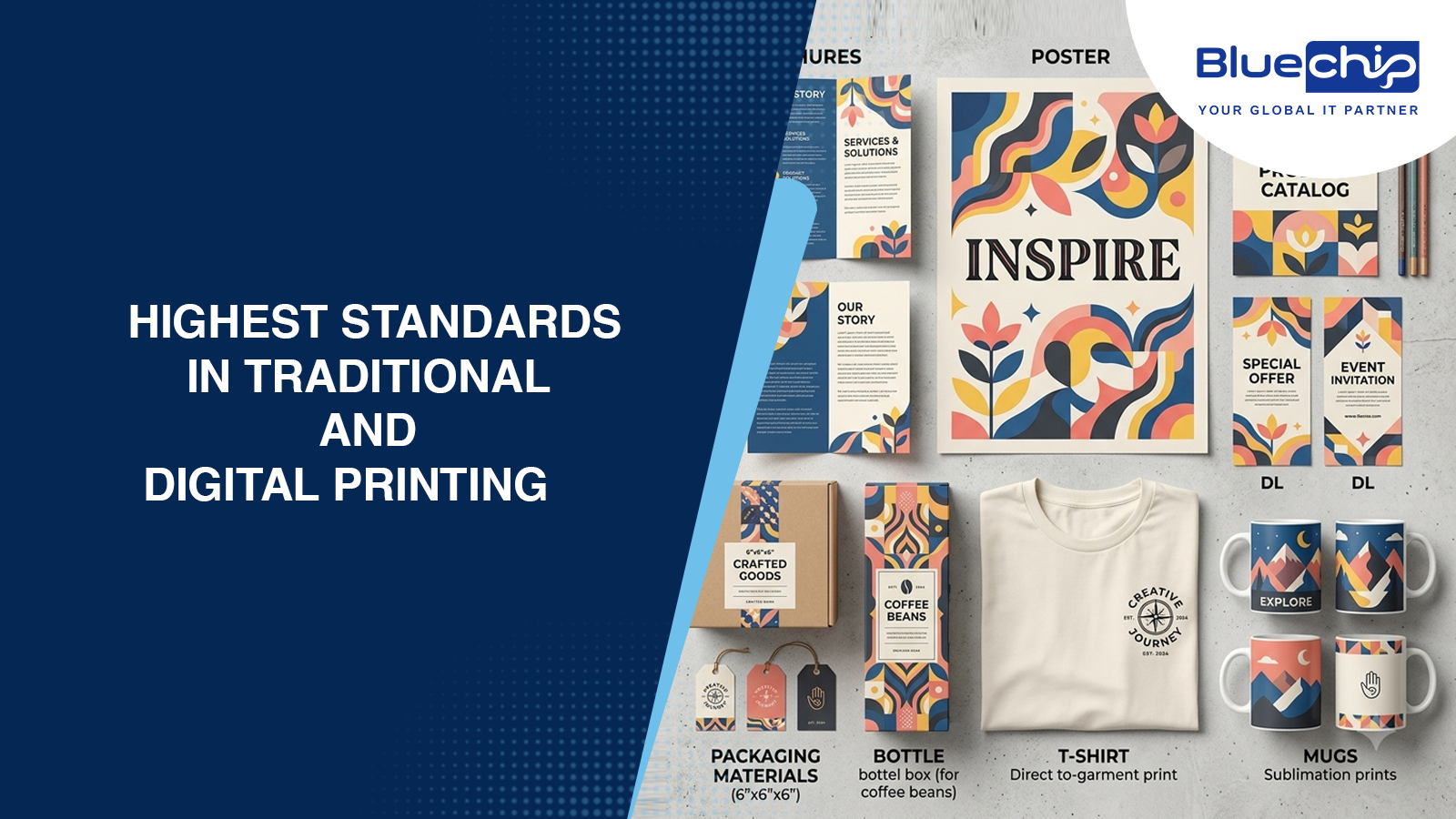
- Corporate brochures and company profiles prepared for print.
- Flyers, leaflets and promotional handouts.
- Posters and event or campaign artwork.
- Business cards, letterheads, envelopes and selected corporate stationery.
- Presentation folders, inserts and other sales-support collateral.
- Event collateral such as invitations, agenda cards, directional graphics and table materials where specifications are provided.
- Branded merchandise artwork for approved items such as T-shirts or mugs, subject to supplier print specifications.
- Existing-artwork refreshes and resizing for new print formats.
Print-Ready Artwork Considerations
- Final trim size and orientation should be confirmed before artwork is released.
- Bleed and safe areas should follow the selected printer’s production requirements.
- Images should be suitable for the intended physical size and print process.
- Colour setup should follow printer requirements; printed colour may not exactly match a backlit screen.
- Fine lines, small text, transparency effects and special finishes should be reviewed against the production method.
- If the job uses die-cutting, folds, spot colours, foiling, embossing or other finishing, the printer’s technical template should be used.
Proofing and Approval
Before final artwork is sent for productionthe client should review spelling, phone numbers, URLs, dates, pricing, product details and other business information. Where a printer provides a digital or physical proof, that proof should also be checked before the full run. Bluechip Gulf Oman can prepare design files, but final production quality, paper, finishing and print tolerances depend on the selected printer or manufacturer.
Get A Callback From us!
Our Print Design Process
1. Brief and format: confirm purpose, audience, size, quantity context and printer requirements.
2. Content and assets: collect final copy, logo files, images and brand guidance.
3. Design development: create the layout for the real print format.
4. Review and revision: check hierarchy, details and physical-size readability.
5. Print-ready handoff: export approved artwork to the printer’s specification.
What We Need Before Design Start
Provide final or near-final copy, logo/source files, brand guidelines, images, required dimensions, printer template if available, contact details, call to action and any production or finishing instructions.
FAQ
What is included in print design services?
Print design can include layout and artwork for brochures, flyers, posters, business cards, stationery, folders and other physical marketing materials. The exact scope should define the size, number of pages or sides, content supplied, number of concepts/revisions and final file formats.
What should I provide before a print design project starts?
Provide the final or near-final copy, logo files, brand guidelines if available, required dimensions, images, contact details, call-to-action information and any printer template or technical specification already supplied.
Can you redesign an existing brochure or flyer?
Yes. Existing artwork can be refreshed for clearer hierarchy, updated branding, new content or a more current visual style. The original editable file is helpful, but a rebuild may be required if only a low-resolution PDF or image is available.
Do you provide printing as well as design?
Print design and physical printing are separate activities. Printing should only be promised if Bluechip Gulf Oman has confirmed that service for the specific project. Otherwise, the design team can prepare artwork to the selected printer’s specification.
What is a print-ready file?
A print-ready file is prepared for the printer’s production requirements, including the correct page size, bleed, safe areas, colour setup and output format. The printer should confirm its preferred specification before final delivery.
Why does printed colour sometimes look different from the screen?
Screens produce colour with emitted light, while print uses inks or toners on physical material. The paper, printer, ink, finishing and colour workflow can all affect the final appearance, so critical colour expectations should be discussed with the printer.
Can you create the same campaign in several print sizes?
Yes. A campaign can be adapted across posters, flyers, cards and other formats, but each size may require layout changes rather than simple scaling. Small formats need tighter content prioritisation, while larger formats need different viewing-distance considerations.
Who checks spelling, prices, dates and business information before printing?
The client should approve all final business information before production. The design team can help spot obvious issues, but final factual approval should come from the person responsible for the content because printing errors can be expensive to correct after production begins.