

Zen Cart
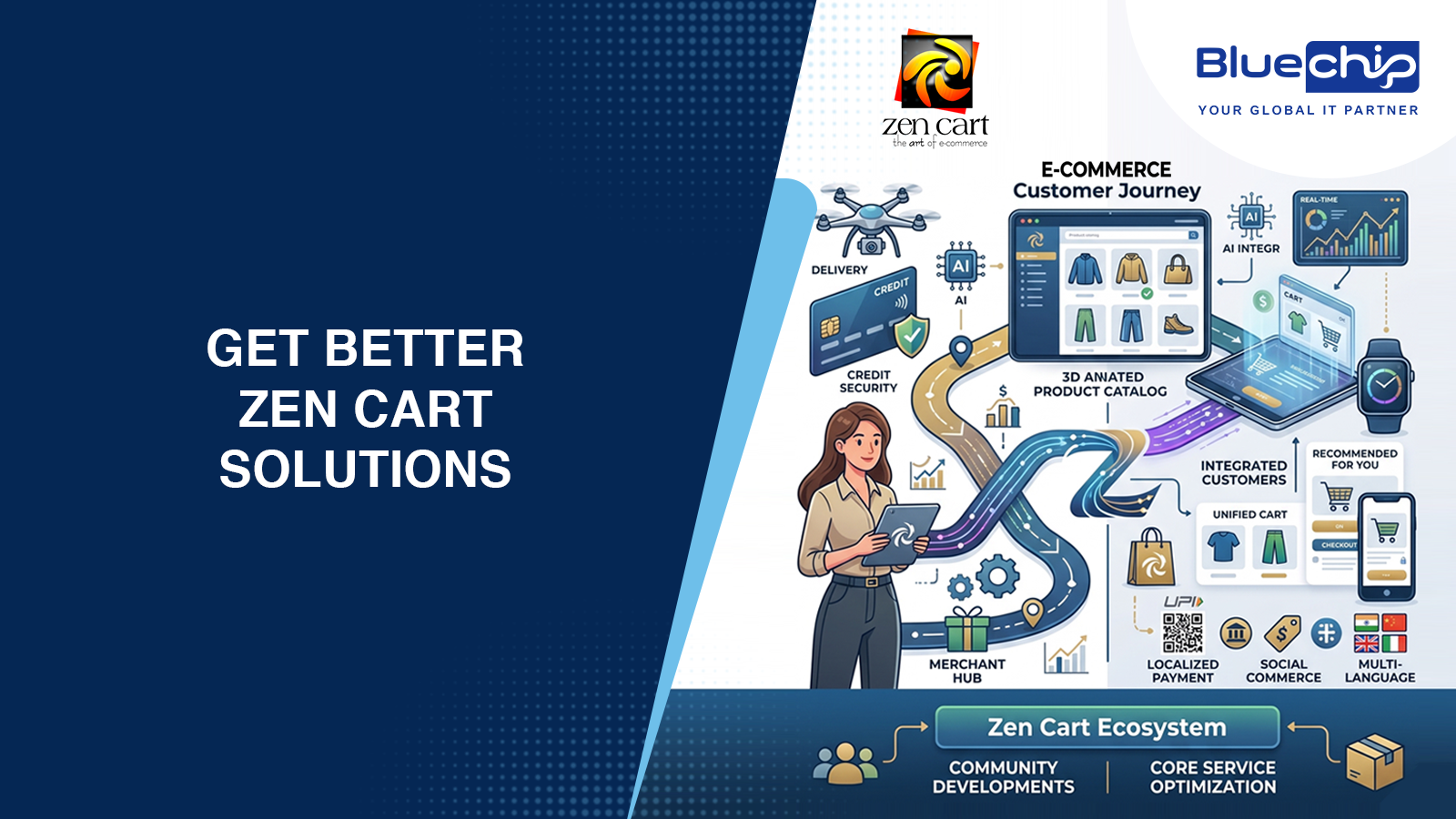
Zen Cart Development Services in Oman
Bluechip Gulf Oman supports Zen Cart projects for businesses that need a self-hosted, open-source e-commerce environment with control over store configuration, catalogue, checkout and integrations. We can help assess existing Zen Cart stores, plan upgrades, customize storefronts, migrate data and connect payment, shipping or business systems where compatible.
What Zen Cart Is
Zen Cart is open-source e-commerce software built for self-hosted online stores. It uses a PHP and database-based architecture and can be extended through templates, plugins and custom development. Because the store owner controls the hosting and application environment, technical maintenance, compatibility and security planning remain important responsibilities.
What We Can Support
New Store Setup
Plan hosting, store configuration, catalogue structure, checkout, tax, currency, language and operational settings based on the project requirements.
Storefront & Template Customization
Adapt the storefront and template layer to the brand and user journey while preserving maintainability and upgrade awareness.
Plugin & Custom Functionality
Review available plugins or build custom functionality where needed. Compatibility should be checked against the Zen Cart version, PHP version and other customizations.
Payment & Shipping Integration
Configure supported payment and shipping methods only after current provider/module compatibility is confirmed. Avoid assuming every provider has a maintained Zen Cart integration.
Upgrade & Modernization
Assess the current Zen Cart, PHP and database versions, custom code, plugins and template before planning an upgrade. Older stores may require staged upgrades or a migration path.
Migration & Data Work
Plan transfer of products, categories, customers, orders, URLs, images and other data when moving from another store or restructuring an existing Zen Cart installation.
Testing, Backups & Deployment
Use backups and a staging/test environment for significant updates, new plugins or custom development before applying changes to the live store.
Maintenance & Support
Maintain the application stack, review updates, monitor compatibility and address store issues according to an agreed support scope.
Zen Cart for Self-Hosted E-Commerce
Zen Cart is open-source e-commerce software for self-hosted online stores. It can support catalogue, checkout, order, payment, shipping and customer-management workflows, with customization through templates, plugins and development. Because the store runs in your own hosting environment, version compatibility, server configuration, security and maintenance should be planned as part of the project.
Control and Customization — With Technical Ownership
Zen Cart gives businesses control over the hosting and application environment and can be customized for specific store workflows. That control also brings responsibility: templates, plugins, custom code, PHP/database versions and integrations should be maintained and tested over time.
When Zen Cart Can Be a Practical Fit
Zen Cart can suit businesses that already operate the platform, need a self-hosted commerce environment, or require custom store workflows that are practical within its ecosystem. For a new project, platform selection should compare business requirements, internal technical ownership, integration needs and long-term maintenance rather than assuming one platform is best for everyone.
Zen Cart Development Capabilities
Store Administration, Reporting and Maintenance
A Zen Cart project should also consider day-to-day administration: products, customers, orders, promotions, reporting, staff access and integrations. Reporting requirements should be defined around business decisions, while newsletters or marketing
Discuss Your Zen Cart Store With Bluechip Gulf Oman
After existing capabilities section
1. Discovery and store audit: review the current store or new-store requirements.
2. Technical readiness: check Zen Cart, PHP, database, hosting, template, plugins and custom code.
3. Scope and build: configure, customize, integrate or migrate in a controlled environment.
4. Testing: validate catalogue, checkout, payments, shipping, admin workflows and integrations.
5. Deployment and handover: use backups, rollback planning and agreed maintenance responsibilities.
Should You Upgrade Zen Cart or Move to Another Platform?
An existing Zen Cart store does not always need to be replaced. If the store is structurally sound and its integrations remain supportable, an upgrade may preserve business logic with less disruption. Migration may be more suitable when customizations are obsolete, the server stack is difficult to modernize, key integrations are no longer maintained or the business needs a different operating model. The decision should follow a technical and business audit.
Compatibility Matters Before You Change a Live Store
Zen Cart core compatibility varies by release, and plugins can have their own PHP/version requirements. Before changing PHP, the database, a template or an extension, confirm the supported combination and test it outside the live store. Backups and rollback planning are especially important for stores with custom code, payment modules or business-system integrations.
Why Work With Bluechip Gulf Oman for Zen Cart?
- Consultation-led assessment of the existing store before recommending upgrades, migration or redevelopment.
- Project planning that considers hosting, PHP/database compatibility, templates, plugins and custom code.
- Integration planning for catalogue, checkout, payments, shipping and related business systems where supported.
- Staging, backup and testing considerations for changes that could affect live store operations.
- Ability to connect Zen Cart work with related web design, e-commerce, SEO and IT requirements where relevant.
- Oman-based contact path through Bluechip Gulf Information Technology LLC in Muscat.
FAQ
Is Zen Cart still supported?
Yes. Zen Cart continues to publish maintained releases and documentation. As of October 2026, the current stable line is 2.2.x, while 2.3.0 is in preparation. For an existing store, the exact upgrade path depends on the installed version and customizations.
Can an old Zen Cart store be upgraded?
Often, yes, but the approach depends on the current Zen Cart, PHP and database versions, template, plugins, overrides and custom code. Very old stores may require staged upgrades or a migration strategy rather than a single-step update.
What should be checked before upgrading Zen Cart?
Review the current Zen Cart version, PHP, MySQL/MariaDB, hosting, template, plugins, custom code, payment/shipping integrations and backups. Significant changes should be tested on a staging or test store first.
Does Zen Cart work with modern PHP versions?
Current Zen Cart releases support modern PHP versions, but compatibility varies by Zen Cart release and by plugin. The core compatibility matrix should be checked before changing PHP, and extensions should be validated separately.
Can Zen Cart integrate with payment gateways and shipping providers?
Search campaigns primarily target keyword-based search demand. Performance Max is goal-based and can use inventory across Google channels such as Search, YouTube, Display, Discover, Gmail and Maps. The right mix depends on the account objective and data quality.
Should we upgrade Zen Cart or move to another e-commerce platform?
That depends on the store’s current condition, customizations, integrations, internal skills, performance needs and future roadmap. An audit should compare the cost/risk of upgrading with the cost/risk of migration.
Can product, customer and order data be migrated into Zen Cart?
Yes, provided the source data can be exported and mapped. The migration plan should define products, categories, customers, orders, URLs, images, options/attributes and any custom fields that must be preserved.
What ongoing maintenance does a Zen Cart store need?
A self-hosted store needs regular attention to application updates, PHP/database compatibility, plugins, backups, HTTPS, server health and custom integrations. The exact maintenance scope depends on the store environment.