
Blog
9 Questions to Ask When Choosing an IT Solution Provider in Oman

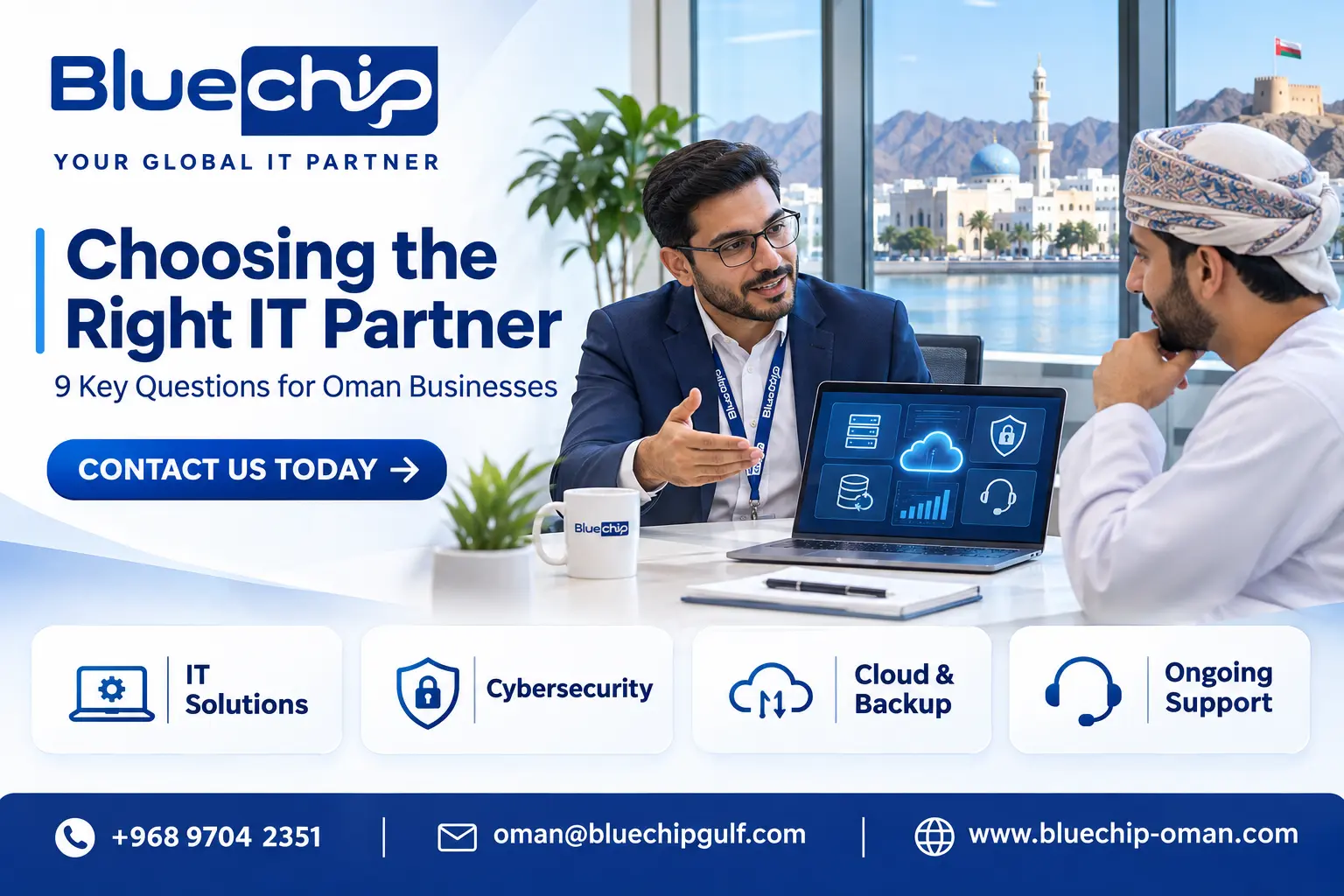
Choosing the right IT partner can be a huge decision for your business. It’s important to get the best IT solutions for your business. So your business can run more efficiently, improve cybersecurity and have long term growth. As more businesses rely on digital solutions, cloud solutions, business applications and networks in Oman now having a good IT support service is essential.
Not only should you look at the cost of IT solutions in Oman, but also their technical skills, quality of service, experience, support and understanding of your specific requirements.
Whether you’re a small business in Muscat or a big enterprise across Oman asking the right questions will ensure you don’t waste money and will have a trustworthy technology partner.
Below we’ve listed 9 key questions to ask when choosing an IT solution company.
1. What IT Solutions & Services Do You Offer?
It’s important to know what kinds of services they offer. Often businesses will have a variety of IT requirements and working with a company who can handle different technology requirements can help make your IT easier to manage.
Ask if they can offer:
- IT Infrastructure Planning
- Network Design
- Cloud Solutions
- Server Management
- Cybersecurity
- IT Consultancy
- Data Backup
- Software & Business Technology Solutions
A trustworthy IT solutions company in Muscat should be able to tell you how they can help your business.
2. Have You Worked With Businesses In Our Industry?
Each industry will have different IT requirements. For example a retail business will require dependable point of sale systems and networks. While a finance organisation will focus on keeping data safe, access secure and complying with regulations.
Ask them if they have experience in working with businesses that have similar requirements.
Look at their past projects, references, technical skills and if they have experience in that industry.
Working with an experienced provider will mean they’ll have knowledge of common IT infrastructure issues and can recommend the best solutions.
3. How Do You Offer IT Support?
It’s important to know how they offer support. This can help reduce downtime, improve productivity and prevent unexpected costs.
Ask
- Do they offer remote & on site support?
- What are your support hours?
- Do you offer emergency support?
- How quickly will you respond?
- Do they have a help desk?
- How do you escalate critical issues?
Also check their SLA. This will show how quickly they can respond, resolve and support.
A dependable IT partner should offer clear processes for both simple requests and critical issues.
4. What Cybersecurity Measures Can You Recommend
When choosing IT solutions for your business in Oman you should consider cybersecurity. Your business will store valuable customer data, financial information, staff data and confidential documents.
Ask them how they can help with cybersecurity and what measures they can take.
Key points to ask about:
- Firewall Configuration
- Endpoint Detection & Protection
- Vulnerability & Penetration Testing
- Email & Anti-Phishing
- Identity & Access Management
- Security Monitoring
- Data Backup
They should know what risks your business faces and recommend the correct measures to keep your data safe, depending on your business’ infrastructure, industry and size.
5. Can Your Solutions Help Us Grow In The Future?
As your business grows your technology requirements will grow. Having more employees, more offices, more data to store and increased customer demands can put pressure on your IT infrastructure.
Ask if they can scale their solutions to fit your growing business.
Can they add more servers, cloud storage, expand your network, add new applications and increase your cybersecurity?
A good enterprise IT solutions company in Oman will look at your current infrastructure and what your future goals are.
This will help your organisation avoid having to replace their infrastructure often.
6. What’s Included In Your Pricing & Contract?
It’s important to know what you’re paying for. Some IT providers offer full packages whilst others charge for installations, maintenance visits, upgrades and emergency support.
Ask for a breakdown of:
- Set up costs.
- Monthly/Yearly Costs.
- Hardware & Software.
- Licensing & Subscription.
- Maintenance & Support.
- Extra costs for on site visits.
Ask them to explain what isn’t included and any extra costs.
By comparing different quotes you’ll be able to make a better purchase decision based on what’s included and the long term value.
7. Do You Have A Process For Implementation?
Having a good process in place will help your implementation go smoothly. If not managed well you could face downtime, compatibility issues and other problems.
Ask them how they implement.
A good process should include:
- Understanding your requirements.
- Analysing your current IT infrastructure.
- Identify any gaps and risks.
- Recommend the right solutions.
- Plan implementation.
- Test & Implement.
- Provide documentation & support.
You should also ask who will be managing the project, keeping you updated and dealing with any technical issues.
8. How Do You Handle Data Backup & Disaster Recovery?
If you suffer any hardware failure, cyber attacks, accidental deletion or other issues you could lose a lot of data.
Before choosing an IT solutions company find out how they manage data backups.
Ask how often they back up, where they store the data, is it encrypted, how they test recovery and how long they keep the data.
Two important terms to understand:
- Recovery Point Objective (RPO) – How much data you can afford to lose in a set time.
- Recovery Time Objective (RTO) – How quickly you want your systems to be back up and running.
Your backup and recovery plan should depend on how important your business data is and how much downtime you can afford.
9. Can You Offer Ongoing Consultancy & Improvements?
Choosing an IT partner shouldn’t just be about getting your installation done and having some technical issues sorted. It’s important to work with a company who can offer ongoing consultancy. This can help your business.
Ask if they can regularly assess your infrastructure, analyse performance, recommend upgrades and identify ways to improve efficiency.
A proactive company should help you understand your changing technology requirements and plan improvements without wasting money.
Ongoing consultancy can be really helpful if you want to upgrade your infrastructure, use cloud technology or improve your cybersecurity.
Final Thoughts
Choosing the right IT partner can be a big decision. Ensuring they have the right technical skills, quality of service, cost, cybersecurity and ongoing support. Asking these 9 questions will help you understand what they can offer and if they can help with your requirements.
Having a dependable technology partner in Muscat and across Oman can help make your IT easier to manage, improve your infrastructure and help your business grow sustainably.
Bluechip can help your business find the right technology solutions to meet your requirements. Whether it’s IT infrastructure, networks, cloud technology or cybersecurity having the right IT partner can help your business have a more dependable and scalable technology.
Looking for an experienced IT solutions provider in Oman? Get in touch with Bluechip and we can discuss your requirements.
FAQ
What should an IT solutions provider offer?
The IT solutions provider should provide services to meet your daily technology needs. These could include network set up, Wi-Fi, server & storage, cloud, Microsoft 365, cyber, backup, help desk. Some companies will also require support with ERP, factory hardware or third party applications. When selecting an IT solution provider it would be worth checking what services they can provide, if they use any sub-contractors and what level of technical help and reporting they can provide.
How can we fairly compare IT solutions providers in Muscat?
All providers on your shortlist should be asked to provide the same information. This should include how many users you have, the amount of offices, applications needed, security requirements and on-site support. Carefully compare the quotes you receive, cheaper options may not include emergency visits, testing of backups, licences & network changes. Check that the provider has a good technical background, what processes do they have in place for incident management? Can they provide customer testimonials? Finally you could run a small trial or infrastructure review to see if they are a good fit for your business.
What should we ask about the support hours, service levels and exclusions?
Before signing a contract ask what support hours will be offered. Are they available during standard hours, weekends, public holidays and out of hours emergencies? Ensure that the agreement clearly states the response time, on site support, escalation and resolution times. Check what exclusions they have. This could include replacement parts, licences, large upgrades, data recovery & third party failures. Make sure who is responsible for backups, admin rights, vendor guarantees and documentation.
Should we use one provider for our network, cloud, backup & cyber as we grow?
Using one IT provider can make things easier to manage. Having one agreement for your network, cloud, backup & cyber can help improve co-ordination between vendors and reduce delays. Opening new offices in Oman will be easier to support. Ensure that the provider has the correct technical knowledge and trusted specialist partners. Admin rights, security & backup should be well managed. If you have complex IT requirements having one main provider with specialist partners may be better.